Beyond the Incas: Uncovering the Mysteries of the Pachacamac Oracle

When planning a trip to Peru, the mind naturally drifts to the towering green peaks of the Andes and the legendary citadel of Machu Picchu. However, thousands of years before the Inca Empire even existed, the arid Pacific coast was home to complex, powerful civilizations.
Just an hour south of Lima lies one of the most important and mysterious archaeological sites in the Americas: the Sanctuary of Pachacamac. If you truly want to understand the spiritual history of Peru, this is where your journey should begin.
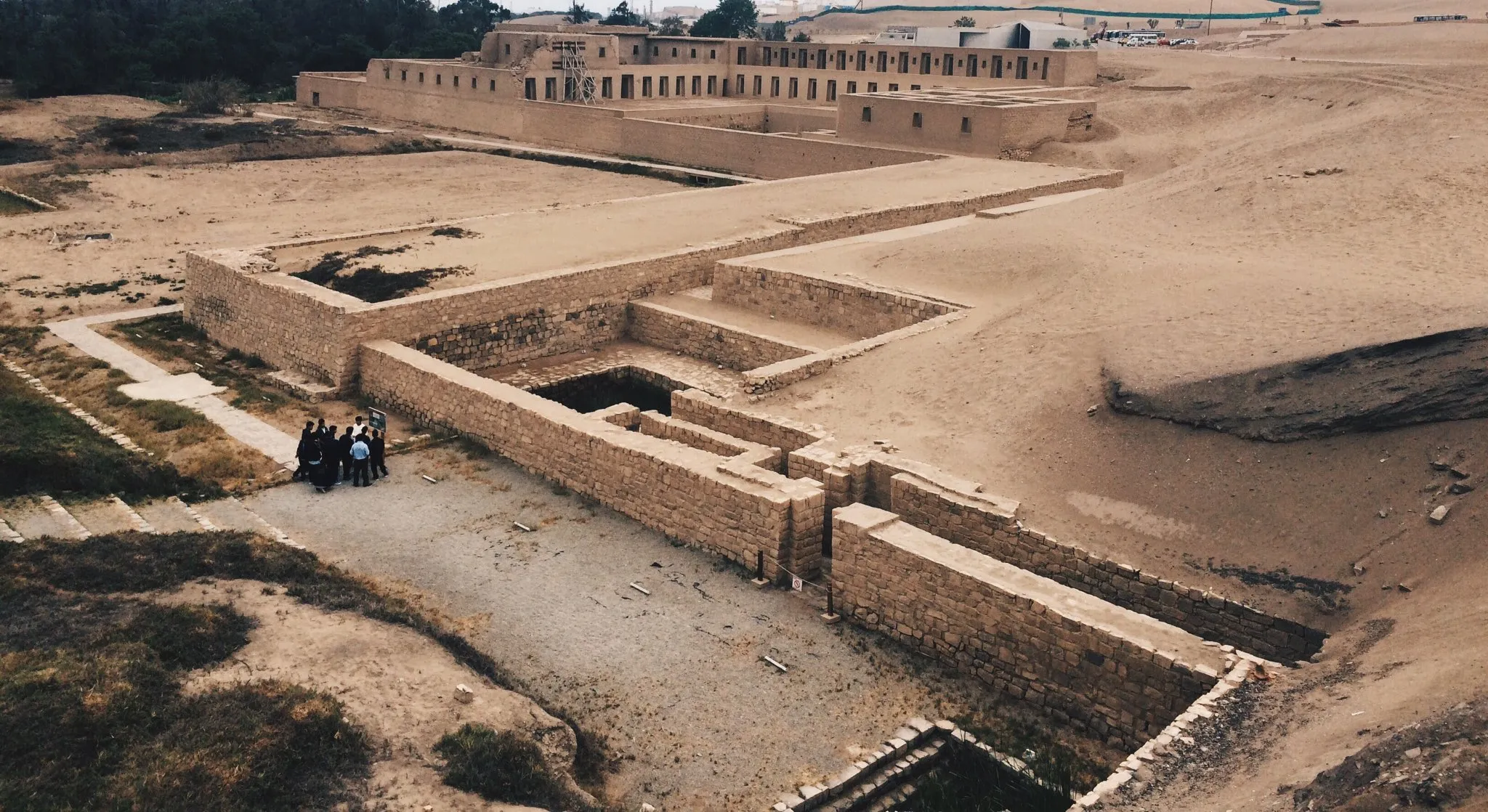
1. The Lord of Earthquakes
The word Pachacamac translates from Quechua as “Creator of the World” or “He who animates the world.” For over a millennium, this site was the most vital pilgrimage center in the coastal region.
People from all over the Andes would travel for weeks, bringing offerings of gold, silver, and textiles to consult the Oracle. The deity was believed to control the movements of the earth—a terrifying and highly respected power in a highly seismic region like Peru.
“To the ancient Andean people, Pachacamac was not just a temple; it was the very axis where the earthly and spiritual worlds collided.”
2. A City Built Over Centuries
What makes Pachacamac unique is that it wasn’t built by a single culture. It was occupied and expanded by the Lima, Wari, Ychsma, and finally, the Inca civilizations.
As you walk through the dusty, monumental adobe streets, you can see the layers of history. You will pass by massive pyramids with ramps, the beautifully restored Acllahuasi (House of the Chosen Women), and finally, the imposing Temple of the Sun, built by the Incas after they conquered the area to assert their dominance while still respecting the ancient Oracle.
3. The Collision of Two Worlds
When the Spanish conquistadors arrived in Peru, they quickly heard tales of the immense wealth hoarded at Pachacamac. Francisco Pizarro sent his brother, Hernando, to loot the sanctuary in 1533.
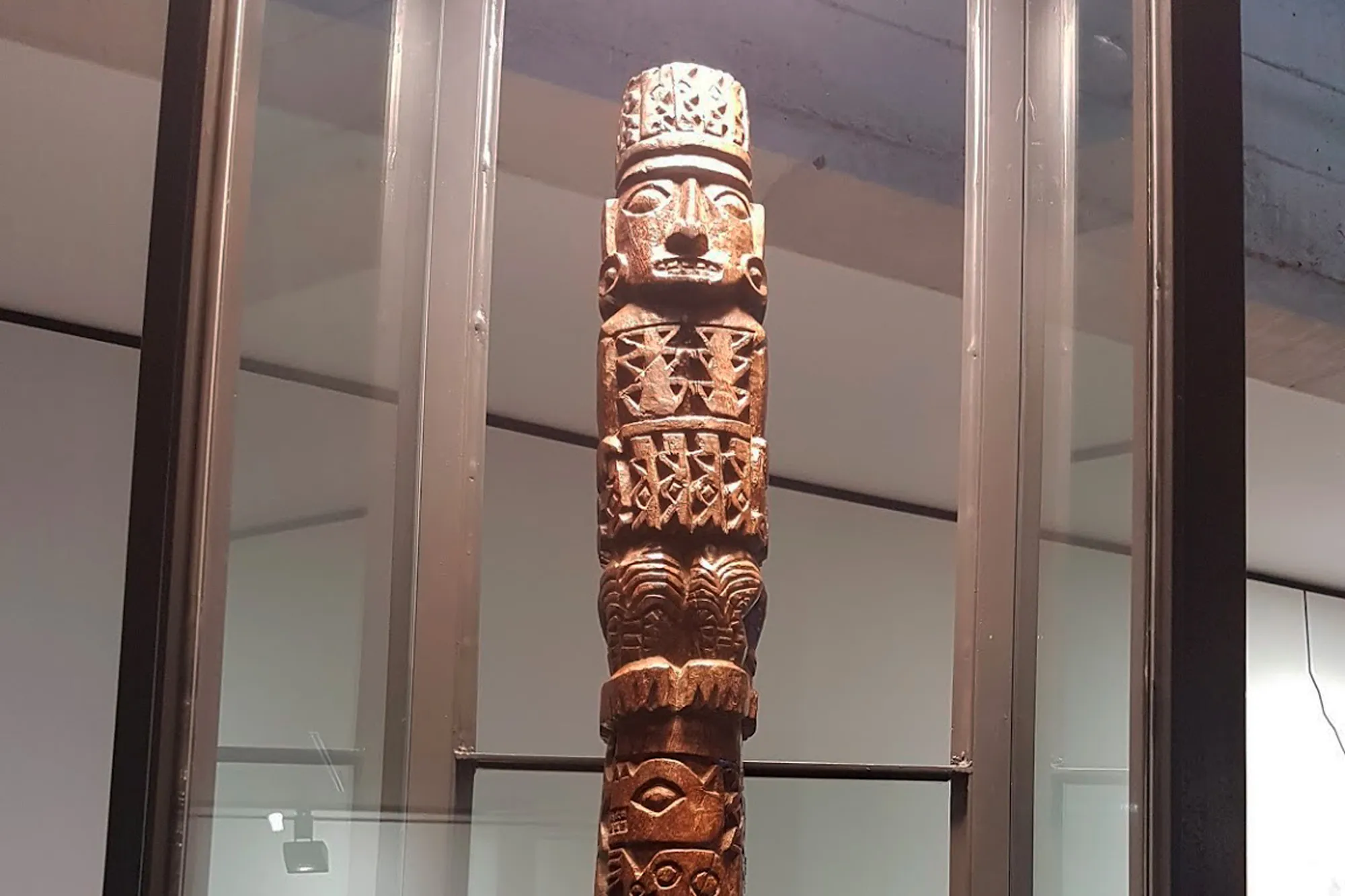
The Spanish demanded to see the almighty god that the locals feared so much. When the priests finally led them into the dark, sacred chamber, the Spaniards were disappointed to find not a massive creature or mountains of gold, but a carved wooden pole. They destroyed the sanctuary, marking the end of the Oracle’s reign.
4. Seeing the Oracle Today
For centuries, that carved wooden idol was thought to be lost or just a myth. Astonishingly, archaeologists unearthed a remarkable wooden staff during excavations in 1938. Today, after advanced carbon dating, we know this is the authentic, original idol of Pachacamac.
You can stand face-to-face with this ancient deity at the state-of-the-art Site Museum located right at the entrance of the complex. The museum also houses fascinating artifacts, textiles, and offerings recovered from the desert sands.
Tips for Your Visit:
- Sun Protection is Mandatory: The sanctuary is vast and located in the coastal desert. Bring a hat, sunglasses, and plenty of sunscreen.
- Go with a Guide: To the untrained eye, adobe ruins can just look like mounds of dirt. An expert guide is essential to explain the architecture, the history, and the myths.
- Combine it with Lunch: The area south of Lima is famous for traditional country restaurants offering fantastic Peruvian cuisine.
Ready to step 2,000 years back in time? Join us on our Pachacamac Sanctuary Tour where we handle the transport, the tickets, and bring the fascinating history of the Oracle to life.